



(A Complete Guide for Parents and Young Learners)
If you’ve searched for Mallakhamba, you’re likely discovering one of India’s most powerful traditional sports — a discipline that blends strength, flexibility, balance, and mental focus. Once practiced primarily by wrestlers and gymnasts, Mallakhamb has now become one of the fastest-growing youth sports across India, especially in cities like Pune.
For beginners, however, one of the most important aspects of starting Mallakhamb is safety and equipment. Unlike casual play, Mallakhamb involves climbing, balancing, and performing controlled movements on poles or ropes. This makes proper training environments and gear essential.
At Vidyanchal Sports Academy (VSA), Mallakhamb training combines traditional techniques with modern safety standards. In this guide, we explore the essentials beginners need — from equipment and clothing to training surfaces and safety practices — along with a brief look at the history and evolution of Mallakhamb gear.
What Is Mallakhamb? A Brief Background
Mallakhamb is an ancient Indian sport that dates back over 2,000 years. Traditionally practiced by wrestlers in Maharashtra, it was used as a form of strength and agility training. The word “Mallakhamb” combines two Sanskrit roots:
- Malla meaning wrestler
- Khamb meaning pole
Historically, wrestlers used wooden poles and ropes to develop grip strength, flexibility, and body control. Over time, Mallakhamb evolved into a competitive sport and performance art, gaining recognition in national and international sporting circles.
Today, children and teenagers train in Mallakhamb not only for competition but also for physical development, posture improvement, and mental discipline.
Why Proper Gear Matters in Mallakhamb
Unlike many field sports, Mallakhamb involves direct body contact with equipment. Beginners must learn to support their own weight while maintaining balance and control. This makes safe practice gear and setup critical.
Correct gear helps:
- Prevent falls and friction injuries
- Improve grip and control
- Build confidence
- Allow longer, safer practice sessions
- Support flexibility and movement
For children especially, using proper equipment from day one builds good habits and reduces fear.
Essential Mallakhamb Equipment for Beginners
Wooden Mallakhamb Pole
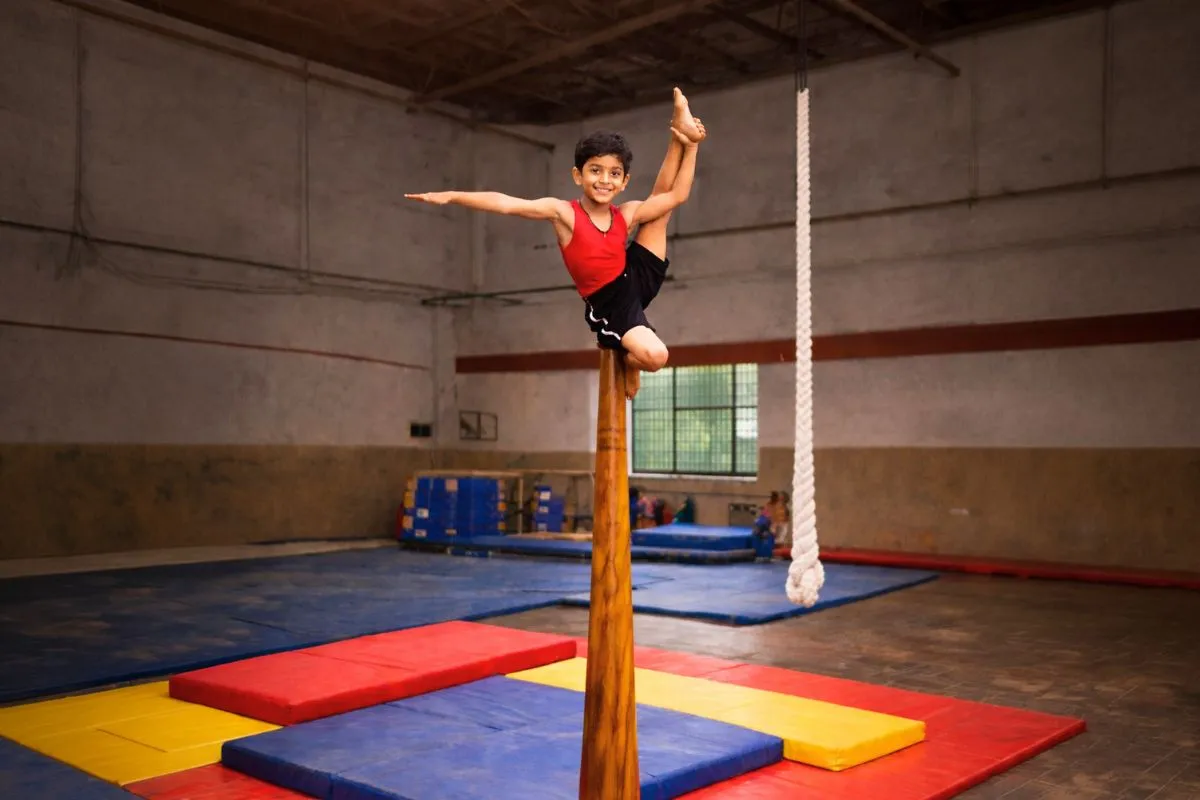
The traditional wooden pole remains the heart of Mallakhamb. Modern poles are crafted from polished hardwood and anchored securely to the ground.
A beginner-friendly pole should:
- Have a smooth but slightly textured surface
- Be firmly installed
- Be surrounded by cushioned flooring
- Be maintained regularly
At Vidyanchal Sports Academy, students train on authentic wooden poles installed in a secure and padded environment. This ensures stability while allowing children to develop grip and body awareness gradually.
Rope Mallakhamb
Rope Mallakhamb is often introduced alongside pole training. It helps build upper-body strength and coordination while being slightly more forgiving for beginners.
A safe rope setup includes:
- Thick, high-quality cotton rope
- Secure overhead anchoring
- Clear landing space
- Regular inspection for wear
Rope training teaches control, climbing technique, and aerial balance — skills that later translate into advanced pole movements.
Cushioned Flooring and Mats
Safety mats are essential for beginners. Even experienced practitioners train with cushioned flooring during practice sessions.
Good mats should:
- Be thick and shock-absorbing
- Cover the entire training zone
- Stay firmly in place
- Be cleaned and maintained regularly
VSA’s Mallakhamb facility includes well-cushioned flooring around poles and ropes, allowing children to practice confidently without fear of hard falls.
Clothing and Personal Gear for Mallakhamb
Unlike sports that require heavy equipment, Mallakhamb gear is minimal but specific.
Practice Clothing
Beginners should wear:
- Fitted cotton shorts
- Sleeveless or fitted athletic tops
- Stretchable clothing that allows movement
- No loose fabric that can catch on equipment
Traditional Mallakhamb attire includes fitted shorts for boys and stretchable athletic wear for girls. The goal is maximum mobility and minimal obstruction.
Grip Support (Natural Methods)
Mallakhamb relies heavily on natural grip. Beginners may use:
- Chalk powder (limited use)
- Natural grip-enhancing powders
- Proper skin care to avoid excessive slipping
Over time, grip strength develops naturally through practice. Coaches typically discourage excessive use of artificial grip aids for children, focusing instead on strength-building.
Skin Protection and Care
Because Mallakhamb involves friction with poles and ropes, minor skin irritation is common initially. Beginners should:
- Keep skin clean and dry
- Use natural oils after training if needed
- Avoid synthetic creams before practice
Coaches guide students on safe skin care routines that support training without affecting grip.
How Mallakhamb Equipment Has Evolved
Traditional Mallakhamb training took place on mud or sand surfaces, with minimal cushioning. While this built toughness, it also increased injury risk.
Modern training facilities now incorporate:
- Cushioned flooring
- Polished and treated wooden poles
- Safety supervision
- Structured warm-ups and cooldowns
- Age-appropriate progression
This evolution makes Mallakhamb safer and more accessible for children and beginners.
Safe Practice Guidelines for Beginners
Starting Mallakhamb requires patience and gradual progression. Safety comes before performance.
Warm-Up and Mobility
Every session should begin with:
- Wrist and shoulder mobility
- Core activation
- Light stretching
- Balance drills
These prepare muscles and joints for load-bearing movements.
Supervised Learning
Beginners should never practice Mallakhamb without trained supervision. Certified coaches ensure:
- Correct technique
- Safe posture
- Gradual progression
- Immediate assistance if needed
At VSA, experienced trainers guide children through structured programs that build strength, flexibility, and confidence step by step.
Gradual Progression
Beginners start with:
- Basic grips
- Static holds
- Assisted climbs
- Controlled descents
Advanced poses are introduced only after foundational strength and balance develop.
Benefits of Mallakhamb for Children
Mallakhamb is one of the few sports that simultaneously develops:
- Core strength
- Flexibility
- Balance
- Coordination
- Mental focus
- Discipline
It also builds body awareness and confidence. Children learn to trust their strength and control, which improves posture and movement in other sports as well.
Why Mallakhamb Training at VSA Is Beginner-Friendly
At Vidyanchal Sports Academy, Mallakhamb is taught in a structured, safe, and encouraging environment. The facility includes:
- Authentic wooden poles and rope setups
- Cushioned training areas
- Certified Mallakhamb trainers
- Age-appropriate programs
- A supportive learning atmosphere
Children train not only to perform movements but to develop discipline, resilience, and focus — qualities that extend beyond sport.
Final Thoughts
Mallakhamb is more than a traditional sport — it’s a complete physical and mental discipline rooted in Indian heritage. For beginners, starting with the right equipment and safe training environment makes all the difference.
A proper Mallakhamb starter setup includes secure poles, quality ropes, cushioned flooring, appropriate clothing, and trained supervision. With these essentials in place, children can learn confidently and safely.
As interest in Mallakhamb continues to grow, more families are discovering its benefits for strength, flexibility, and discipline. With the right gear and guidance, beginners can build a strong foundation and develop a lifelong connection to this unique sport.
At Vidyanchal Sports Academy, every Mallakhamb journey begins with safety, structure, and support — helping young learners discover what their bodies and minds are capable of achieving.
FAQs – Mallakhamb Essentials for Beginners
1. What age can kids start Mallakhamb?
Children can begin Mallakhamb training as early as 5–6 years, starting with basic balance, grip, and flexibility exercises under supervision.
2. Do beginners need special equipment for Mallakhamb?
Yes. A safe beginner setup includes a proper wooden pole or rope, cushioned mats, fitted clothing, and coach supervision to prevent injury and build confidence.
3. Is Mallakhamb safe for kids?
When practiced in a structured environment with certified trainers and safety mats, Mallakhamb is considered safe and highly beneficial for strength, flexibility, and coordination.
4. What should children wear for Mallakhamb practice?
Children should wear fitted athletic clothing, such as stretchable shorts and snug tops, to allow free movement and proper grip on the pole or rope.
5. How often should beginners practice Mallakhamb?
Beginners typically train 2–3 times a week to build strength and technique gradually without overloading muscles.