



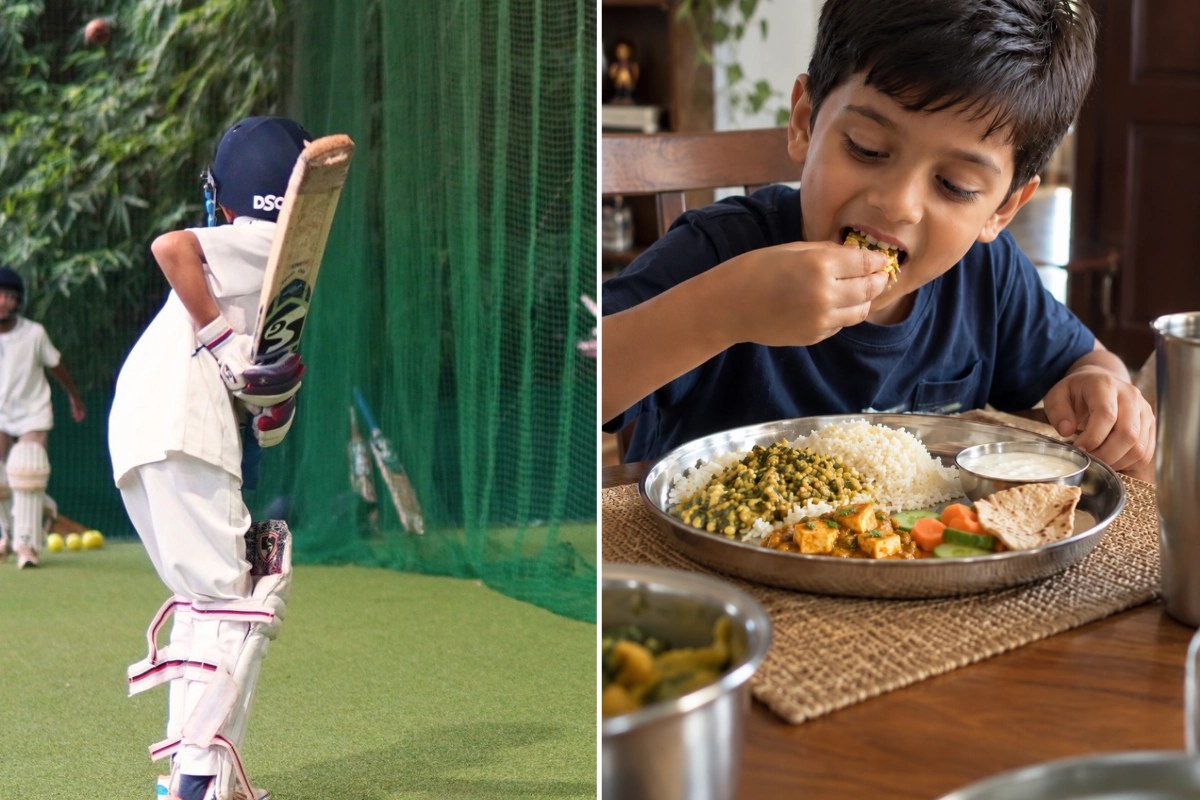
Protein for young athletes is a topic that often leaves parents with more questions than answers. Does a child who plays football need more protein? Should young cricketers drink protein shakes? Is eating eggs every day enough? And how much protein does a growing child actually need?
Protein is certainly important. It helps the body grow, maintain and repair tissues, and recover from physical activity. But young athletes need more than protein alone. Carbohydrates provide important fuel for exercise, while healthy fats, vitamins, minerals and fluids also contribute to growth and performance.
For parents of children participating in football, cricket, basketball, skating or Mallakhamb at Vidyanchal Sports Academy, understanding the basics of sports nutrition can make everyday meals much more effective.
Why Do Young Athletes Need Protein?
Protein plays an important role in growth and tissue repair. For a child who is regularly training, it also contributes to the recovery process after physical activity.
But there is a common misconception that eating significantly more protein automatically creates stronger or more muscular young athletes.
It doesn’t.
Exercise and appropriate training stimulate physical development; protein provides the building blocks the body needs to support growth and repair. The American Academy of Pediatrics specifically cautions against the idea that simply consuming large amounts of protein will build muscle.
For children, the bigger priority is adequate overall nutrition.
How Much Protein Do Young Athletes Need?
There is no single protein number that applies to every young athlete.
Requirements can vary according to age, body size, growth stage, sport, training volume and overall diet. A recent UPMC Sports Medicine guide suggests that many young adolescent athletes may fall around 1.2–1.5 grams of protein per kilogram of body weight per day, while noting that individual needs vary.
The American College of Sports Medicine’s youth-athlete nutrition guidance gives a broader range, noting that young athletes may require approximately 1.0–1.6 g/kg/day, while also emphasising that specific recommendations for youth athletes are not firmly established.
That is why parents should avoid treating a protein target as a competition.
A child does not need to weigh every meal or count every gram of protein unless a qualified healthcare or nutrition professional has specifically recommended it.
Protein Should Not Replace Carbohydrates
This is one of the most important points for young athletes.
Football, cricket and basketball involve repeated bursts of activity. Children need sufficient energy to train, play and recover.
Carbohydrates are an important fuel source for exercise, while protein has a more important role in growth, tissue maintenance and recovery.
A plate containing only eggs or chicken is therefore not necessarily a better sports meal than one containing a balanced combination of carbohydrates, protein, vegetables and healthy fats.
For example:
Rice + dal + vegetables + curd
can be a perfectly practical meal for a young athlete.
So can:
Roti + paneer + vegetables + fruit
or
Eggs + poha + fruit + milk
The objective is balance.
Fuel Up for Training
A young athlete needs enough energy to train before worrying about adding extra protein.
Indian Protein-Rich Foods for Young Athletes
Parents do not need to rely on expensive specialised foods to increase protein intake.
There are plenty of familiar options available in an Indian household.
Eggs
Eggs are a convenient source of protein and can be included in breakfast or meals.
Milk and Curd
Milk, yoghurt and curd provide protein alongside other nutrients such as calcium.
Dal and Pulses
Dal, chickpeas, rajma and other pulses are useful plant-based protein sources and can easily become part of everyday meals.
Paneer
Paneer can be incorporated into meals or snacks and provides a convenient vegetarian protein option.
Soy
Tofu, soy products and other soy-based foods can contribute useful protein to a vegetarian diet.
Nuts and Seeds
Peanuts, almonds, seeds and nut butters can provide protein as well as healthy fats. Portions should be appropriate for the child’s age.
Fish and Lean Meat
For families who eat non-vegetarian food, fish, chicken and other lean meats can provide high-quality protein.
The American Academy of Pediatrics also lists meat, fish, dairy, eggs, legumes, grains, nuts and seeds among useful protein sources for children.
Does a Young Athlete Need Protein After Training?
Recovery nutrition matters, but parents do not need to turn the minutes immediately after training into a complicated routine.
A balanced meal or snack containing protein and carbohydrates can support recovery. UPMC’s sports nutrition guidance recommends regular protein intake throughout the day and notes that protein after activity can support muscle recovery, while also emphasising that total daily intake is more important than obsessing over precise timing.
For example, after a training session, a child might have:
- Milk and a banana
- Curd with fruit
- Egg sandwich
- Paneer with roti
- Dal and rice
- Peanut butter on whole-grain bread
The best option is usually one the child already enjoys and tolerates comfortably.
Plan the Post-Training Meal
Recovery starts with everyday eating habits, not a special supplement.
Are Protein Shakes Necessary for Kids?
For most young athletes, no.
The American Academy of Pediatrics says most young athletes who eat a healthy, balanced diet do not need or benefit from protein supplements. It recommends focusing instead on fluids, adequate calories, training, conditioning and rest.
This is particularly important because social media can make protein powders and high-protein products appear essential for athletic development.
They aren’t.
If a child has a restricted diet, difficulty meeting nutritional needs or a specific medical or performance requirement, parents should discuss it with a paediatrician or qualified sports dietitian rather than independently introducing supplements.
Vegetarian Athletes Can Get Enough Protein
Being vegetarian does not automatically put a young athlete at a disadvantage.
Dal, beans, chickpeas, soy, dairy, paneer, nuts, seeds and grains can all contribute to protein intake.
The key is variety.
Combining different plant foods across the day can help provide a broad range of amino acids and nutrients. Young vegetarian athletes may benefit from individualised meal planning if there are concerns about adequate intake.
Vegetarian? There Are Plenty of Options
Good sports nutrition does not require meat.
What Should a Young Athlete Eat on Training Days?
Parents often make the mistake of changing a child’s entire diet once sports training begins.
There is usually no need for a complicated “athlete diet.”
Instead, aim for regular, balanced meals containing:
Carbohydrates: rice, roti, poha, oats, potatoes, fruits and whole grains.
Protein: eggs, milk, curd, paneer, dal, beans, chicken, fish, soy and nuts.
Healthy fats: nuts, seeds, dairy, eggs and appropriate cooking oils.
Fruits and vegetables: for vitamins, minerals, fibre and other nutrients.
Hydration should also be part of the routine. For shorter activities, water is generally sufficient; longer or particularly intense sessions may require different hydration considerations depending on the conditions and the individual athlete.
Don’t Forget That Young Athletes Are Still Growing
A child is not simply a smaller adult athlete.
Their body is simultaneously supporting growth, development, school, everyday activity and sports training.
That means nutrition needs to support both the athlete and the growing child.
Under-fuelling can be a much bigger concern than parents sometimes realise. Relative Energy Deficiency in Sport, or RED-S, can occur when an athlete does not consume enough energy to meet both sporting demands and the needs of a growing body. It can affect athletes of any age or gender and may be associated with poorer performance and increased injury risk.
Parents should therefore focus on helping children eat enough overall rather than simply trying to maximise protein.
Nutrition Is Part of Training
Training develops sporting skills. Good nutrition gives the growing body the resources to keep developing.
What Parents Should Avoid
When it comes to protein and young athletes, avoid turning nutrition into a numbers game.
Parents should be cautious about:
- Forcing children to eat excessive amounts of protein
- Replacing balanced meals with protein products
- Restricting carbohydrates
- Using supplements without professional guidance
- Following adult bodybuilding diets
- Comparing a child’s diet with another athlete’s
- Making body weight or appearance the focus of sports nutrition
The goal is not to create a “high-protein child.”
The goal is to help a young athlete eat enough, recover well and grow healthily.
Nutrition and Training at Vidyanchal Sports Academy
At Vidyanchal Sports Academy, children participate in structured training across football, cricket, basketball, skating and Mallakhamb.
Regular sports training is only one part of a young athlete’s development. Rest, hydration and balanced nutrition all support the ability to participate consistently and recover between sessions.
Parents can therefore think of nutrition as an extension of the training environment. A child who arrives at practice properly fuelled, hydrated and rested is better positioned to participate fully and enjoy the session.
The objective is not to create professional athletes overnight. It is to help children develop healthy habits alongside sporting skills.
Ready to Train?
A Simple Protein Checklist for Parents
Instead of counting every gram, ask yourself a few simple questions each day:
Did my child eat regular meals?
Was there a protein source in their meals?
Did they eat enough carbohydrates to support activity?
Did they have fruits and vegetables?
Did they drink enough fluids?
Did they get adequate rest?
If the answer is generally yes, you are already covering many of the fundamentals of sports nutrition.
For children with specific nutritional needs, restricted diets, unusual fatigue, growth concerns or performance-related dietary questions, speak with a paediatrician or registered sports dietitian.
Explore Sports Coaching at Vidyanchal
Good nutrition and regular training work together to support a young athlete’s development.
Final Thoughts
Protein for young athletes is important, but it is only one piece of the puzzle.
Children need protein for growth and recovery, but they also need carbohydrates for energy, healthy fats, vitamins, minerals, fluids and enough total food to support both sport and normal development.
For parents, the simplest approach is often the best: build meals around familiar whole foods, offer variety, maintain regular eating habits and avoid getting caught up in the idea that more protein automatically means better performance.
Whether your child is training on a football pitch, cricket ground, basketball court, skating area or Mallakhamb setup, the foundation remains the same:
Train well. Eat well. Recover well. Keep playing.
Frequently Asked Questions
How much protein does a young athlete need?
Protein requirements vary according to age, body size, growth and training. Some sports nutrition guidance places many young adolescent athletes around 1.2–1.5 g/kg/day, but individual requirements can differ.
What are the best protein foods for young athletes?
Eggs, milk, curd, paneer, dal, beans, chickpeas, soy, nuts, fish and lean meats are practical protein-rich options.
Do kids need protein powder if they play sports?
Usually not. Most young athletes can meet their protein needs through a balanced diet. Supplements should only be considered with appropriate professional guidance.
Is protein more important than carbohydrates for young athletes?
No. Protein supports growth and repair, while carbohydrates are an important source of fuel for physical activity. Young athletes need both as part of a balanced diet.
What should a child eat after sports training?
A familiar snack or meal containing both protein and carbohydrates can support recovery. Options include milk and fruit, curd with fruit, an egg sandwich, paneer with roti or a regular dal-and-rice meal.