



In childhood, confidence and discipline are not taught through lectures — they are learned through experience. One of the most powerful environments for developing both is sport. Across cultures, generations, and education systems, structured sports participation has consistently been linked to stronger self-belief, emotional regulation, focus, and long-term discipline in children.
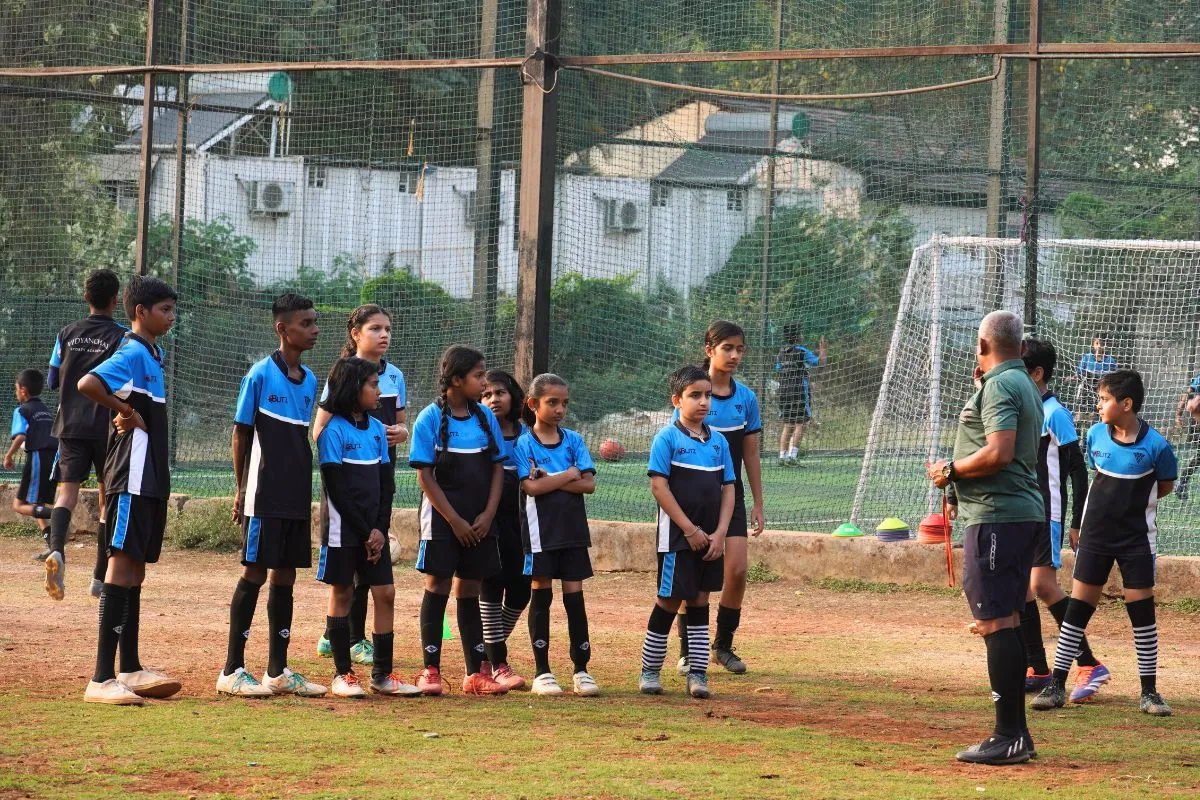
At Vidyanchal Sports Academy (VSA), this connection is visible every day: children who arrive hesitant gradually stand taller, speak clearer, persist longer, and take responsibility for their actions. This transformation is not accidental. It is supported by decades of research in psychology, neuroscience, and education — and echoed in the journeys of some of the world’s most respected athletes.
This article explores how sports build confidence and discipline in kids, backed by research and real-life examples, and why these traits last well beyond the playing field.
Understanding Confidence and Discipline in Child Development
Confidence in children refers to self-efficacy — the belief that “I can try, learn, and improve.”
Discipline refers to self-regulation — the ability to follow routines, delay gratification, and stay committed to goals.
According to research published in Frontiers in Psychology (2019), children develop lasting confidence not from success alone, but from mastery experiences — repeated attempts, feedback, and gradual improvement. Sports provide exactly this structure.
Similarly, discipline is strengthened when children experience predictable routines, clear rules, and consistent consequences, all of which are foundational elements of organized sports training.
How Sports Build Confidence in Kids
Repeated Exposure to Challenge
Sports constantly place children in situations where effort matters more than talent. Learning to pass accurately, skate without falling, or maintain balance under pressure builds a sense of capability.
A longitudinal study by the University of Illinois (2018) found that children participating in regular sports showed significantly higher self-esteem and social confidence than non-participants, regardless of competitive level.
Each training session reinforces a powerful message: progress is possible.
Safe Failure and Recovery
Unlike academic settings where mistakes are often penalized, sports normalize failure. Missed goals, lost matches, and falls are expected parts of learning.
Psychologists refer to this as error-based learning, a process shown to increase resilience and reduce fear of failure. When children learn that mistakes do not define them, confidence becomes internal — not dependent on praise or comparison.
This principle is visible in athletes like Michael Jordan, who famously said that his success was built on thousands of missed shots and failed games. His confidence was not rooted in perfection, but persistence.
Social Confidence Through Team Belonging
Team sports add a powerful social layer. Children learn to communicate, cooperate, and be accountable to others. Belonging to a team increases social identity, which psychologists link to higher confidence and emotional security.
A 2020 study in The Journal of Adolescent Health showed that children involved in team sports reported lower social anxiety and higher peer confidence than those in individual activities alone.
How Sports Build Discipline in Kids
Routine and Structure
Discipline grows when children follow routines they understand and accept. Sports training provides:
- Fixed schedules
- Clear expectations
- Repeated habits
Neuroscience research shows that repeated routines strengthen the brain’s executive function, particularly in the prefrontal cortex — the area responsible for planning, focus, and impulse control.
This is why children who train regularly often show better time management and focus in school as well.
Delayed Gratification
Improvement in sports is rarely immediate. Skills take weeks or months to develop. This teaches children delayed gratification — a key component of discipline.
The famous Stanford Marshmallow Experiment, later revisited in modern child psychology research, showed that children who learned to delay gratification were more likely to succeed academically and socially later in life. Sports naturally train this ability through long-term effort.
Tennis legend Rafael Nadal is often cited as an example of discipline over talent — known for his relentless routines, consistency, and respect for process from a young age.
Respect for Rules and Authority
Sports operate within clear boundaries — rules, referees, coaches, and teammates. Children learn:
- To follow instructions
- To respect decisions they may not agree with
- To manage emotions under pressure
These lessons directly translate into classroom behavior and social settings. According to The British Journal of Sports Medicine (2021), structured sports participation is associated with improved behavioral regulation and lower impulsivity in children.
Confidence + Discipline = Emotional Resilience
When confidence and discipline develop together, children gain emotional resilience — the ability to cope with stress, setbacks, and uncertainty.
This is particularly important in today’s environment, where children face academic pressure, digital distraction, and social comparison at younger ages.
Athletes like Serena Williams exemplify this balance. Her confidence on court is matched by extraordinary discipline in training, recovery, and mental preparation — habits formed early and reinforced through sport.
Individual Sports vs Team Sports: What Builds More?
Both formats contribute uniquely:
- Individual sports (skating, athletics) build self-reliance, focus, and internal discipline.
- Team sports (football, basketball, cricket) strengthen communication, shared responsibility, and social confidence.
Research suggests that multi-sport exposure between ages 6–12 produces the best outcomes, allowing children to develop a broad confidence base and adaptable discipline.
This approach is echoed by footballers like Sunil Chhetri, who credits early multi-sport activity for his mental strength and leadership qualities.
The Role of Coaches and Environment
Confidence and discipline do not grow in harsh or fear-based environments. Studies from Harvard Graduate School of Education (2020) emphasize that supportive coaching — clear expectations paired with encouragement — produces stronger long-term motivation.
Effective sports environments:
- Reward effort, not just results
- Correct without humiliation
- Encourage reflection, not comparison
This is why structured academies with trained coaches play a crucial role in healthy development.
Long-Term Benefits Beyond Sport
Children who develop confidence and discipline through sports are more likely to:
- Take initiative in academics
- Handle failure constructively
- Show leadership in group settings
- Maintain healthy routines into adulthood
A World Health Organization (WHO) report (2022) highlights that early sports participation is strongly linked to lifelong physical activity and mental well-being.
In short, sports do not just create athletes — they shape capable, composed individuals.
Final Thoughts
Sports provide a rare combination of challenge, structure, feedback, and emotional safety — the exact conditions children need to build confidence and discipline. Backed by research and reflected in the lives of world-class athletes, the evidence is clear: sport is one of the most effective developmental tools available to children.
At Vidyanchal Sports Academy, training is not about creating winners at all costs. It is about creating children who believe in themselves, respect effort, and show up consistently — on the field, in school, and in life.
Confidence teaches children “I can.”
Discipline teaches them “I will.”
Together, they form the foundation of growth — and sport is where that foundation is built, one session at a time.