

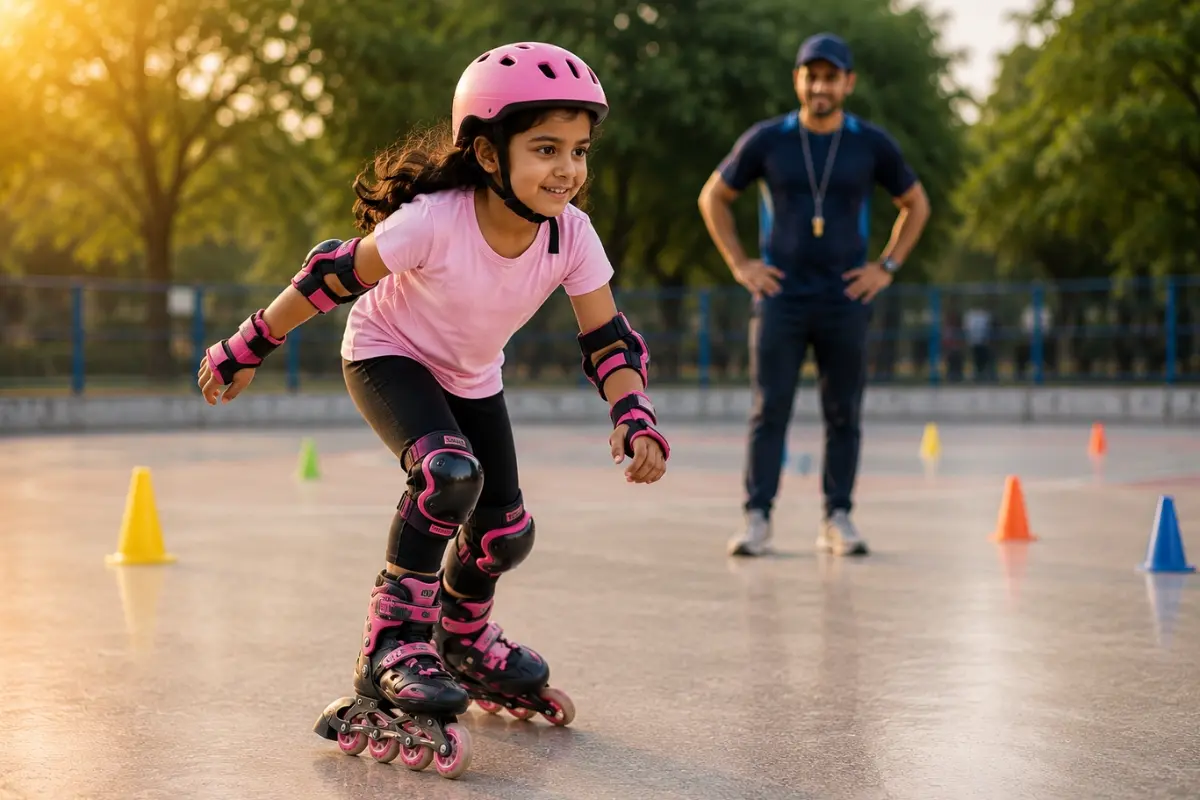
Skating safety gear for kids is one of the most important things parents should understand before enrolling children in skating classes. Whether a child is learning inline skating or roller skating for the first time, proper safety equipment builds confidence, reduces injury risk, and helps beginners enjoy the learning process.
At Vidyanchal Sports Academy, beginner skating sessions are designed around one key principle: children learn faster when they feel safe. The right protective gear allows young skaters to focus on balance, movement, and coordination instead of fearing falls.
Many parents assume skating gear is only for advanced skaters performing tricks or racing. In reality, beginners need safety gear the most because early training involves learning balance, stopping, turning, and controlled falling.
This guide explains exactly what skating safety gear kids need before their first class, why each item matters, and how to choose the right beginner setup.
Why Safety Gear Matters in Beginner Skating
Falls are a normal part of learning to skate. Children are developing:
- Balance
- Coordination
- Body control
- Reaction timing
During the first few sessions, beginners often:
- Fall forward onto hands
- Lose balance while turning
- Slide sideways while stopping
Proper gear absorbs impact and prevents minor falls from becoming painful or frightening experiences.
At Vidyanchal Sports Academy, safety equipment is treated as a core part of skating training—not an optional extra.
The Essential Skating Safety Gear Checklist
Every beginner skater should have:
- Helmet
- Knee pads
- Elbow pads
- Wrist guards
- Proper skates
- Appropriate clothing and socks
Each piece serves a specific purpose during early learning stages.
Helmet: The Most Important Piece of Gear
A helmet is absolutely essential for beginner skating.
Most beginner falls happen unexpectedly during:
- First push-offs
- Sudden stops
- Backward imbalance
A proper skating helmet protects:
- Forehead
- Side of the head
- Back of the skull
Parents should look for helmets that:
- Fit snugly without wobbling
- Have adjustable chin straps
- Include ventilation
- Meet safety certifications
Brands such as Decathlon, Oxelo and Strauss offer beginner-friendly skating helmets commonly used by young skaters.
At Vidyanchal Sports Academy, helmets are considered non-negotiable for beginner sessions.
Wrist Guards: The Most Overlooked Protection
Children instinctively extend their hands while falling. This makes wrists especially vulnerable during beginner skating.
Wrist guards:
- Stabilize the wrist joint
- Reduce impact during falls
- Prevent sprains and fractures
Good wrist guards should:
- Fit firmly but comfortably
- Allow finger movement
- Stay secure during motion
For beginners, wrist guards are often more important than children initially realize because hand-first falls are extremely common during early skating lessons.
See the training spaces where young skaters build confidence safely.
→ Explore VSA Facilities
Knee Pads: Essential for Learning Balance
Knees take frequent impact during beginner skating.
Knee pads help children:
- Practice confidently
- Recover quickly from falls
- Learn stopping techniques without fear
Quality knee pads should:
- Cover the kneecap fully
- Include soft inner cushioning
- Stay in place while moving
Many beginner skaters become more willing to try new movements once they realize falls are manageable with proper protection.
At Vidyanchal Sports Academy, beginner skating drills are structured so children gradually become comfortable moving, falling, and getting back up safely.
Elbow Pads: Protection During Side Falls
While wrist and knee impacts are most common, sideways falls often affect elbows.
Elbow pads:
- Protect joints from direct impact
- Reduce bruising and scrapes
- Improve confidence during turning drills
Combined protective sets (helmet + wrist + knee + elbow pads) are often the most practical option for beginners.
Choosing the Right Beginner Skates
Safety gear works best when paired with proper skates.
For beginner children, skates should:
- Fit snugly around the ankle
- Provide stable wheel support
- Include reliable brakes
- Be lightweight and adjustable
Popular beginner brands include:
- Rollerblade
- Oxelo
- Cosco
Parents should avoid buying oversized skates “to grow into,” as loose skates reduce control and increase injury risk.
Clothing and Socks for Safe Skating
Many parents overlook clothing when preparing for skating classes.
Children should wear:
- Comfortable athletic clothing
- Stretchable pants or shorts
- Long socks to reduce friction inside skates
Avoid:
- Loose clothing that may catch wheels
- Heavy jeans restricting movement
- Slippery socks inside skates
Proper clothing helps children move freely and comfortably during lessons.
Learn how young athletes are guided step by step.
→ Visit the VSA About Page
Why Beginners Need Full Gear Even for Basic Lessons
A common misconception is that beginners practicing “simple movements” don’t need full protection.
In reality:
- Most falls happen during basic balance training
- Confidence develops faster with protection
- Fear reduces movement quality
Children wearing proper safety gear tend to:
- Try movements more willingly
- Recover emotionally after falls faster
- Learn balance more confidently
At Vidyanchal Sports Academy, coaches often observe that properly equipped beginners progress faster because they feel secure enough to experiment and learn.
How Coaches Teach Safe Falling
Good skating programs don’t just teach movement—they teach how to fall safely.
Beginner lessons often include:
- Controlled knee drops
- Safe hand positioning
- Balanced recovery after falls
- Proper stopping technique
These skills dramatically reduce injury risk over time.
Common Mistakes Parents Make
Buying Cheap Toy Skates
Low-quality skates often lack ankle support and proper wheel control.
Skipping Wrist Guards
Many parents focus only on helmets, but wrist injuries are extremely common in beginners.
Buying Oversized Equipment
Loose gear shifts during falls and reduces protection.
Ignoring Surface Quality
Safe skating requires smooth, obstacle-free surfaces.
At Vidyanchal Sports Academy, skating zones are maintained to support beginner safety and controlled learning.
Why Structured Coaching Matters for Beginners
Even the best safety gear cannot replace proper supervision.
Structured beginner coaching ensures:
- Safe progression of drills
- Proper posture correction
- Surface awareness
- Controlled speed development
Children learn:
- How to stop safely
- How to distribute weight
- How to maintain balance
These fundamentals are difficult to develop through unsupervised skating alone.
Keep the wheels moving outside regular sessions.
→ Rent a Turf or Training Space at VSA
Final Thoughts
Skating safety gear for kids is not just about protection—it is about creating a learning environment where beginners feel confident enough to improve.
A proper beginner skating setup should always include:
- Helmet
- Wrist guards
- Knee pads
- Elbow pads
- Well-fitted skates
- Comfortable athletic clothing
When children feel safe, they move more freely, recover from mistakes faster, and enjoy the learning process far more.
At Vidyanchal Sports Academy, beginner skating training combines structured coaching, safe infrastructure, and proper safety practices to help young skaters build balance, confidence, and control from their very first class. Because in skating, the first lesson isn’t speed or tricks. t’s learning how to move safely, confidently, and without fear.